
In recent years, hyacorp filler has become a popular non-surgical option for enhancing the shape and volume of the gluteal area. Its minimally invasive approach and natural-looking results make it an appealing choice for individuals seeking body contouring in Dubai. However, achieving safe and effective outcomes with hyacorp filler for buttocks requires a careful understanding of the anatomical structures and considerations specific to the buttocks.
Understanding Hyacorp Filler for Buttocks
Hyacorp is a dermal filler made primarily from cross-linked hyaluronic acid. It is designed to provide volume, contour, and skin hydration while integrating naturally into the surrounding tissues. Unlike traditional surgical methods, such as implants or fat grafting, hyacorp filler for buttocks offers a less invasive procedure with minimal downtime, making it attractive for patients who prefer non-surgical enhancements.
However, the success of this procedure is not solely dependent on the filler itself—it is heavily influenced by a detailed understanding of buttock anatomy.
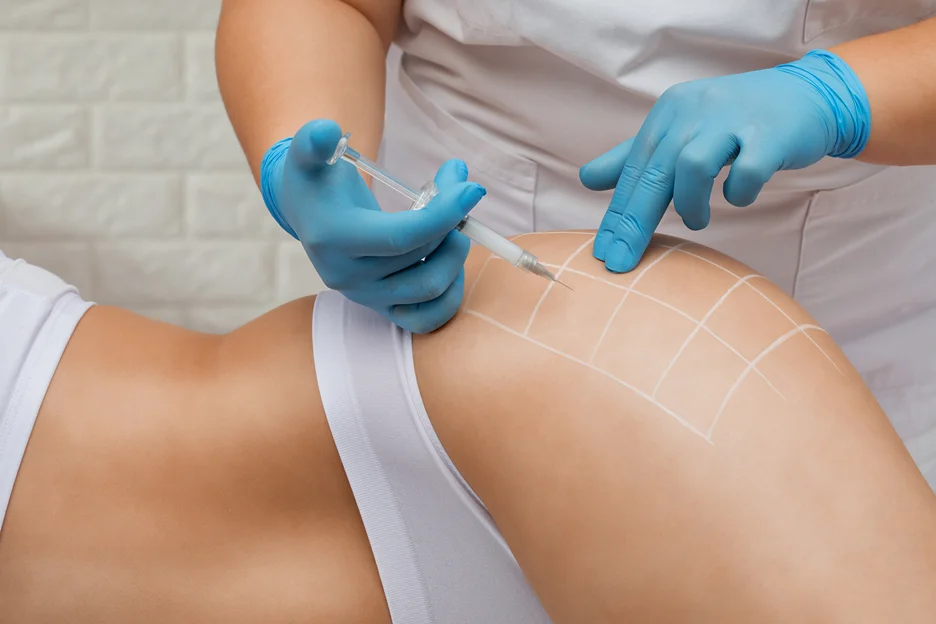
Key Anatomical Considerations
When planning a buttock augmentation with Hyacorp, several anatomical factors must be carefully evaluated:
1. Gluteal Muscle Structure
The buttocks primarily consist of the gluteus maximus, medius, and minimus muscles.
Gluteus maximus: This is the largest muscle, responsible for the overall shape and projection of the buttocks. Proper placement of the filler in relation to this muscle ensures natural-looking results and reduces the risk of unevenness.
Gluteus medius and minimus: These muscles provide lateral contour and subtle curvature. Knowledge of their positioning helps avoid overfilling or unnatural bulges.
2. Fat Distribution
Natural buttock shape is influenced by subcutaneous fat layers, which vary between individuals. Understanding fat distribution patterns is critical:
Ensures even filler placement for smooth contours.
Reduces the risk of lumpiness or irregularities.
Guides the volume of filler required in different regions of the buttocks.
3. Neurovascular Structures
The buttocks contain important nerves and blood vessels, including the sciatic nerve and superior and inferior gluteal arteries. Incorrect injection techniques can lead to complications such as nerve injury or vascular compromise.
Proper anatomical mapping is essential to minimize these risks.
Deep injections near the gluteal muscles must be approached with caution.
4. Skin and Tissue Elasticity
The quality and elasticity of the overlying skin significantly influence the results of hyacorp filler for buttocks:
Firmer skin provides better support and long-lasting contour.
Loose or sagging skin may require a combination approach with skin tightening procedures for optimal outcomes.
5. Symmetry and Proportion
Achieving aesthetic symmetry is crucial. The buttocks are not identical in shape or volume, and customized filler placement can enhance balance and proportion.
Careful assessment of hip width, waist-to-hip ratio, and gluteal projection ensures a natural appearance.
Overcorrection in one area can result in an unnatural or disproportionate look.
Benefits of Understanding Anatomy for Hyacorp Treatment
Proper anatomical knowledge directly affects both safety and aesthetics when using hyacorp filler for buttocks:
Minimizes risks: Knowledge of muscle layers and vascular pathways helps prevent complications.
Enhances precision: Targeted filler placement results in smoother, more natural curves.
Promotes longevity: Correct anatomical integration ensures the filler settles evenly and lasts longer.
Boosts patient satisfaction: Patients achieve the desired silhouette without unnatural lumps or unevenness.
Safe Injection Techniques
Several injection techniques are recommended for safe and effective buttock augmentation with Hyacorp:
Layered approach: Administering filler in multiple layers, from deeper muscular planes to superficial fat layers, for natural volume distribution.
Cannula use: Using blunt-tip cannulas instead of needles can reduce trauma to blood vessels and nerves.
Gradual volume increase: Injecting small amounts over multiple sessions helps achieve precision and prevents overfilling.
Post-Treatment Considerations
After receiving hyacorp filler for buttocks, understanding anatomy also helps with post-treatment care:
Avoid sitting for prolonged periods immediately after injections to allow the filler to settle properly.
Gentle massage may be advised in some areas to ensure even distribution.
Awareness of pressure points over the gluteal muscles helps prevent distortion of the filler.
Conclusion
Hyacorp filler for buttocks offers a revolutionary, non-surgical option for enhancing gluteal contours. However, the procedure’s success depends largely on a deep understanding of buttock anatomy, including muscle structure, fat distribution, neurovascular pathways, and skin elasticity. Proper anatomical planning ensures safer treatments, natural-looking results, and higher patient satisfaction.
For individuals in Dubai seeking minimally invasive body contouring, incorporating these anatomical considerations is crucial. By prioritizing safety and precision, hyacorp filler for buttocks can provide beautifully sculpted results without the need for surgery, making it an increasingly preferred choice for modern aesthetic enhancement.