
Hair thinning and excessive hair shedding have become increasingly common concerns among both men and women, especially in fast-paced urban lifestyles like Dubai. Among the modern medical solutions available today, PRP hair treatment has gained significant attention for its natural approach and scientifically backed results.
Many people searching online for “prp hair treatment dubai price” are usually trying to understand not just affordability, but also how the treatment works and whether it is truly effective. To make an informed decision, it is important to first understand what PRP hair treatment actually involves in a medical context.
Understanding PRP Hair Treatment
PRP stands for Platelet-Rich Plasma, a concentration derived from a patient’s own blood. In medical terms, it is a regenerative therapy that uses the body’s natural healing components to stimulate hair growth and improve hair follicle health.
The concept is based on one simple principle: platelets contain growth factors that help repair and regenerate tissues. When injected into the scalp, these growth factors can activate dormant hair follicles and improve the overall quality of existing hair.
Unlike surgical procedures, PRP hair treatment is minimally invasive and relies entirely on biological material from the patient’s own body, making it a natural and safe option for many individuals.
How PRP Works in Hair Restoration
The PRP process follows a structured medical approach designed to extract and concentrate healing components from the blood. Once prepared, this solution is carefully applied to targeted areas of the scalp where hair thinning is visible.
Here is how the process generally works:
- A small amount of blood is drawn from the patient
- The blood sample is placed in a centrifuge machine
- The machine separates platelets from other blood components
- The platelet-rich plasma is collected in a concentrated form
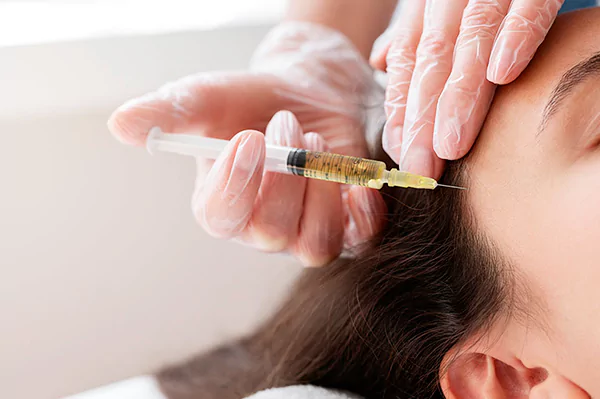
- The PRP is injected into specific areas of the scalp
Once injected, the growth factors begin stimulating inactive hair follicles, improving blood circulation in the scalp and encouraging natural hair regrowth over time.
Medical Procedure of PRP Hair Treatment
From a clinical perspective, PRP hair treatment is performed in a controlled, hygienic environment to ensure safety and effectiveness. The procedure is usually completed within a short session and does not require hospitalization.
A typical PRP session involves:
1. Consultation and Scalp Evaluation
The scalp condition is assessed to determine the level of hair thinning and suitability for treatment.
2. Blood Collection
A small blood sample is taken, similar to a routine blood test.
3. Processing of PRP
The sample is processed using a centrifuge to isolate platelet-rich plasma.
4. Scalp Injections
The PRP is injected into targeted areas using fine needles.
5. Post-Treatment Care Guidance
Patients are advised on basic scalp care to support healing and maximize results.
Benefits of PRP Hair Treatment
PRP is widely used in dermatology and hair restoration due to its regenerative properties. Some of the key benefits include:
- Stimulates natural hair growth
- Strengthens weak and thinning hair
- Improves hair density and thickness
- Enhances blood supply to hair follicles
- Uses the body’s own natural healing components
- Minimally invasive with little to no downtime
Because it is a non-surgical approach, many individuals prefer PRP over more invasive hair restoration methods.
Who Can Consider PRP Treatment?
PRP hair treatment is generally recommended for individuals experiencing early to moderate stages of hair thinning. It is commonly considered in cases such as:
- Genetic hair thinning (androgenic alopecia)
- Post-pregnancy hair shedding
- Stress-related hair loss
- Weak or damaged hair follicles
- Early signs of receding hairline
However, individuals with advanced baldness or complete follicle loss may not respond as effectively, since PRP works by stimulating existing follicles rather than creating new ones.
What to Expect After Treatment
PRP hair treatment does not deliver instant results. Instead, it works gradually by improving scalp health over time. Most individuals begin to notice visible changes within a few weeks to months.
Common expectations include:
- Reduced hair shedding in early stages
- Gradual improvement in hair texture
- Increased hair density over repeated sessions
- Healthier and stronger hair strands
Multiple sessions are often recommended depending on individual hair conditions and response to therapy.
Safety and Medical Considerations
One of the key advantages of PRP therapy is its strong safety profile. Since the treatment uses the patient’s own blood, the risk of allergic reactions or rejection is extremely low.
However, like any medical procedure, it should be performed under proper clinical guidelines. Mild side effects such as temporary redness or slight scalp sensitivity may occur but usually resolve quickly.
PRP in Dubai’s Aesthetic and Medical Landscape
In cities like Dubai, where advanced aesthetic treatments are widely adopted, PRP hair therapy has become a popular choice for individuals seeking non-surgical hair restoration solutions. It is often researched alongside terms such as “prp hair treatment dubai price”, as people explore both medical effectiveness and practical considerations before proceeding.
The growing demand reflects a broader trend toward natural, regenerative treatments that focus on long-term hair health rather than quick cosmetic fixes.
Conclusion
PRP hair treatment is a scientifically grounded medical procedure that utilizes the body’s natural healing abilities to support hair regrowth and scalp rejuvenation. By concentrating growth factors from the patient’s own blood, it offers a minimally invasive solution for hair thinning and early-stage hair loss.
For individuals exploring modern hair restoration options in Dubai, understanding the medical process behind PRP is essential before making any decision. While many search for practical details such as “prp hair treatment dubai price”, it is equally important to focus on how the treatment works, its suitability, and expected outcomes.
With its natural approach and growing clinical acceptance, PRP continues to stand out as a promising option in the field of hair restoration.